Designing a Smarter Way to Store, Organize and Share Memories.

Project
Pixel Vault
Role
Product Designer (UX/UI)
Tools
Figma, Canva, Chatgpt
Introduction
Every year, we capture thousands of photos and videos.
Vacations. Birthdays. Family gatherings. Random screenshots. Work files. Etc
Yet finding a single photo six months later often feels impossible.
Our phones slowly become digital junk drawers filled with memories we rarely revisit.
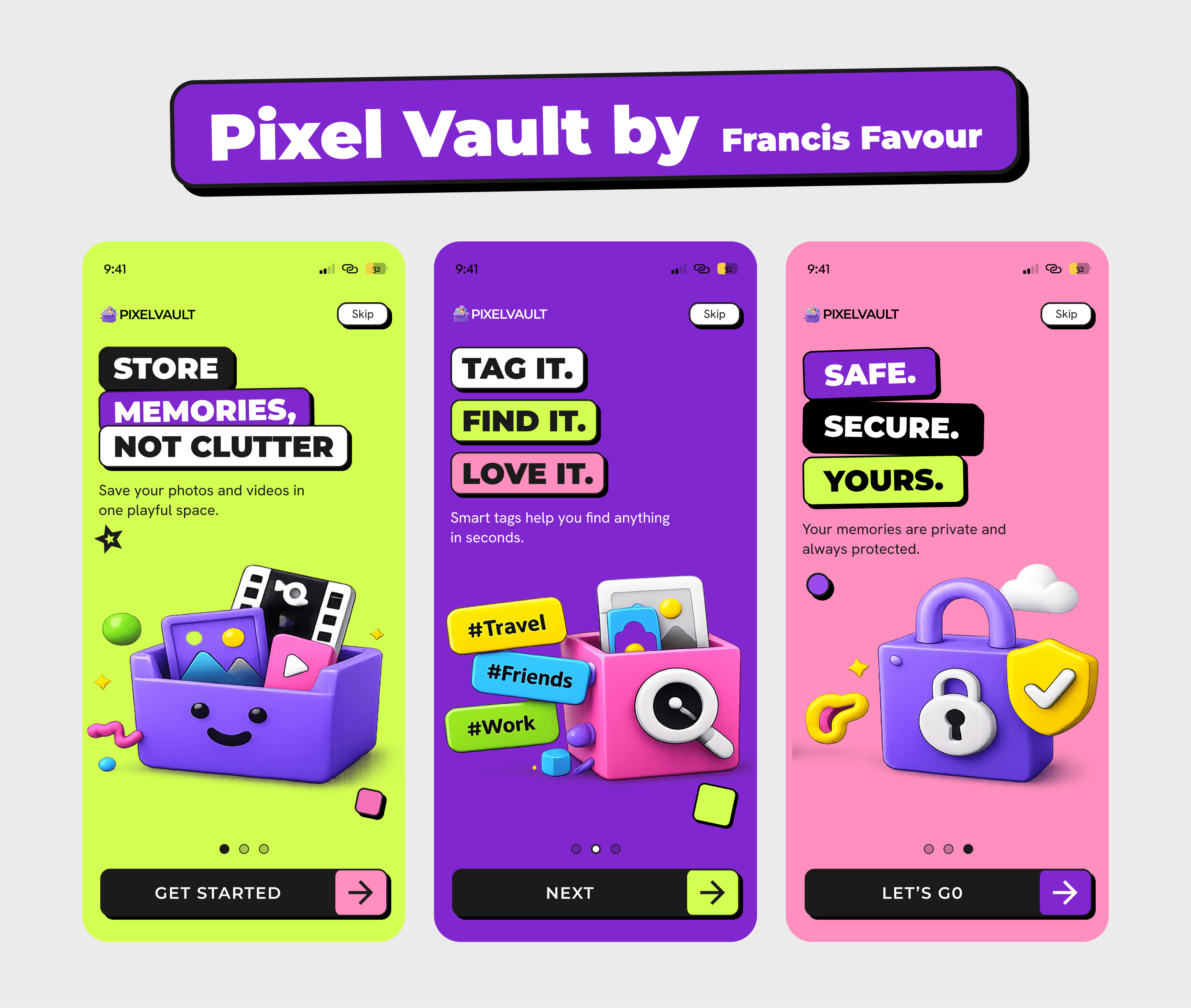
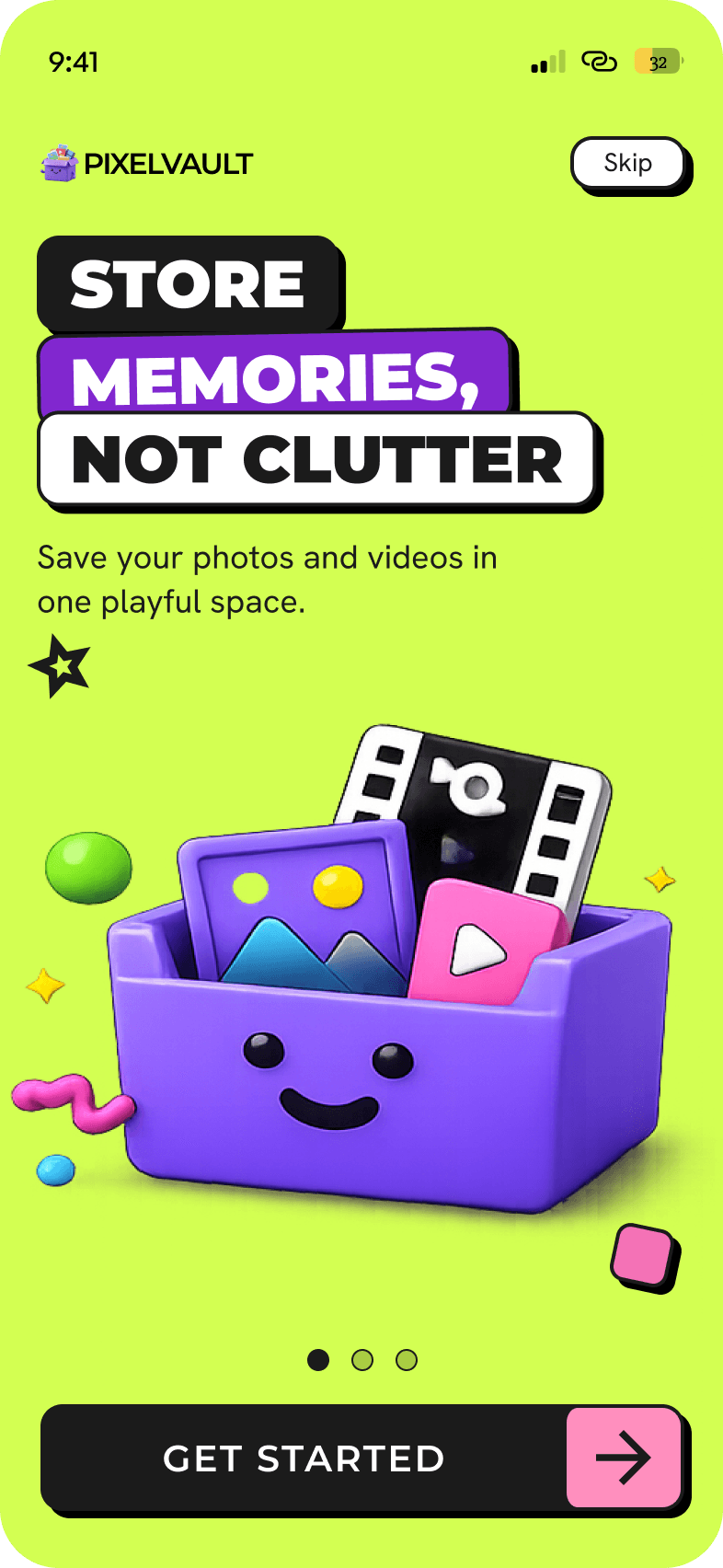
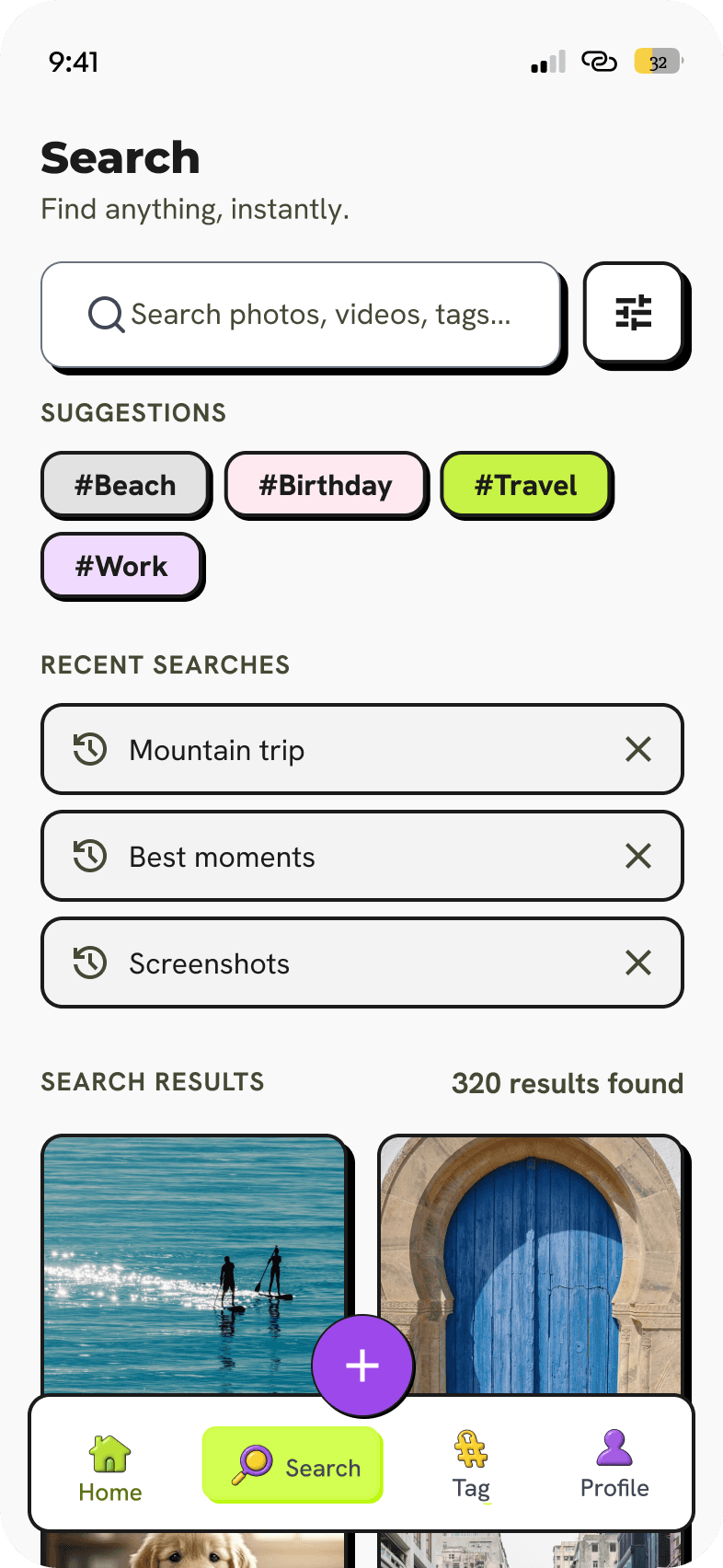
Pixel Vault was created to solve that problem, not by giving users another gallery app, but by completely changing how memories are stored, organized, and shared.
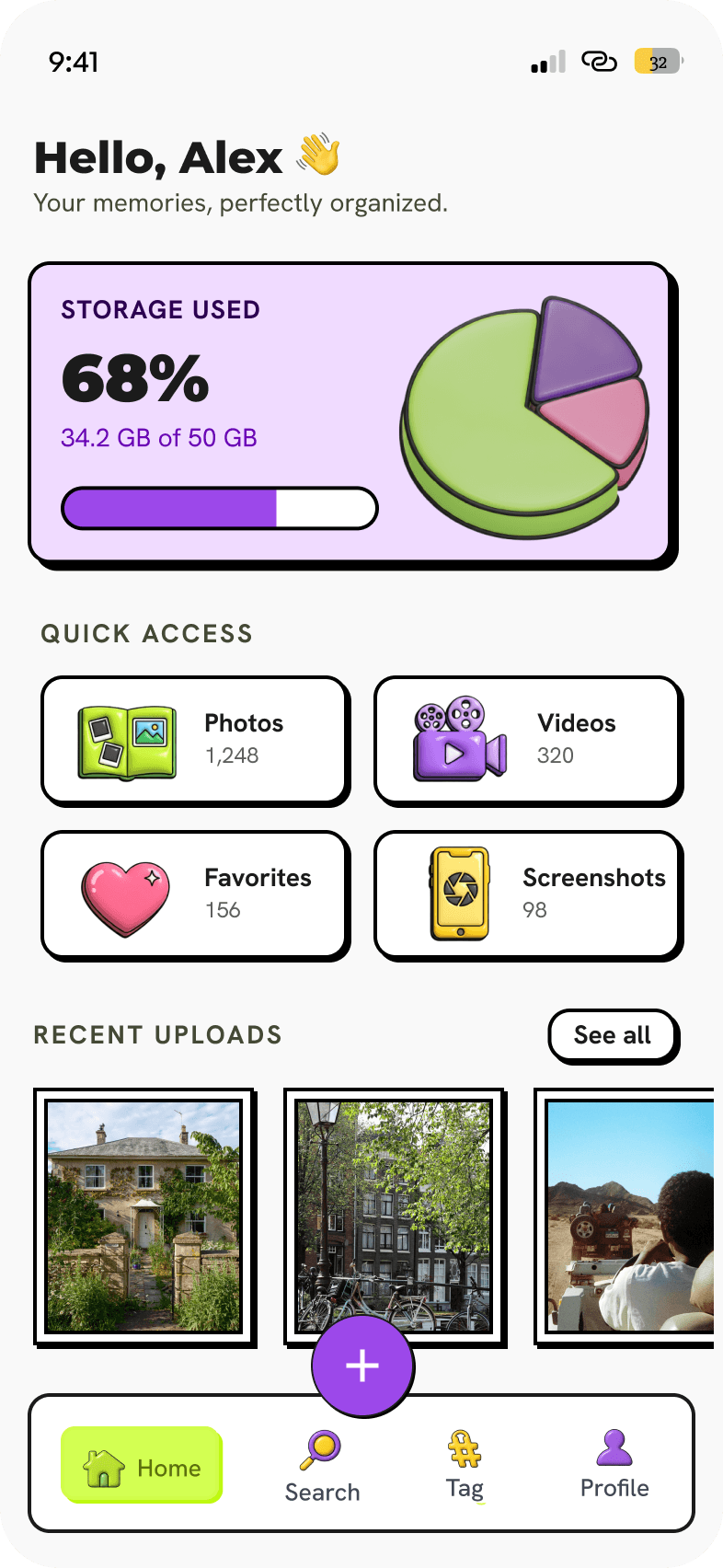
Instead of endlessly scrolling through thousands of images, users simply upload everything into organized cloud vaults, use intelligent tags, and instantly find what they're looking for.
The goal wasn't just storage.
It was creating a better memory experience.
The Problem
Every year, we capture thousands of photos and videos.
Vacations. Birthdays. Family gatherings. Random screenshots. Work files. Etc
Yet finding a single photo six months later often feels impossible.
Our phones slowly become digital junk drawers filled with memories we rarely revisit.
Pixel Vault was created to solve that problem, not by giving users another gallery app, but by completely changing how memories are stored, organized, and shared.
Instead of endlessly scrolling through thousands of images, users simply upload everything into organized cloud vaults, use intelligent tags, and instantly find what they're looking for. The goal wasn't just storage. It was creating a better memory experience.
The Solution
What if memories lived inside shared spaces instead of individual phones?
Instead of asking someone to send pictures…
Everyone uploads directly into one shared memory vault.
The entire event becomes one living album.
That's the core idea behind Pixel Vault.






Reflection
Pixel Vault began with a simple observation: our phones are full of moments that matter, yet finding and sharing them is often frustrating. Rather than adding another storage solution, the goal was to rethink the entire experience,from capture to organization to collaboration.
Designing this concept reinforced an important lesson: the best products don't always solve the biggest technical problems. Sometimes, they remove the smallest everyday frustrations that millions of people quietly accept.
If Pixel Vault were taken beyond the concept stage, the next iterations would explore AI-powered auto-tagging, facial recognition (with user consent), timeline-based memory highlights, offline syncing, and collaborative storytelling features that turn shared albums into living digital journals.
At its core, Pixel Vault isn't just about storing photos in the cloud, it's about making memories easier to find, easier to share, and more enjoyable to revisit. That's what turns a storage app into an experience people genuinely want to use.